


Black History Month serves as a time to honor the countless contributions of Black Americans in our country. We also take this time to honor those who unjustly became a part of history too soon.
Across the country, Black women are disproportionately impacted by abortion bans. While mothers living in states that ban abortion are nearly 2x as likely to die during pregnancy, childbirth, or soon after giving birth as compared to states that protect abortion, in states with bans alone, Black mothers are 3.3x as likely to die as White mothers.
The statistics are awful, but they don’t tell the full story of what it feels like to lose a loved one to an abortion ban. When Candi Miller died from what would later be determined as a preventable death were it not for Georgia’s abortion ban, her sister Turiya Tomlin-Randall was thrust into a political moment that made major headlines. Candi’s death was political, and Turiya has since become an advocate for abortion rights, but she is also just an older sister who had to navigate her own grief and step in to care for her sister’s children.
Turiya and Candi
She was my baby sister and as the older sister, I kind of took on the role of more of a mother figure than a sister figure early on as we were growing up. There’s almost a seven-year age difference. My mom had two kids, me and my brother back to back, and then she had a break in between so the last three were closer. So my brother and I were the older siblings and Candice was just like the adventurous wild child. She was the one who always spoke her mind and she just marched to her own beat, even as a child.
When I went off to college, I would come home and I would take them to the zoo and do all of the things. So I was the fun big sister, but I was also very firm. Instead of living up to my mom’s expectations, they wanted to live up to my expectations. I’m an educator, I’m a teacher. I teach biology and anatomy. So when I graduated from grad school, and I moved to Atlanta, I went and got Candice. I was like, “Come on, you’re going to come with me,” and she moved with me to Atlanta and that’s where she met her husband.
As for who she was, she was a vibrant, great person. I mean, she loved to have fun, but she was also a solitary person. She was only outgoing and vibrant around people that she knew and loved. The friends that she had were very close and dear to her and of course she loved her children to death.
She was a fighter in every sense of the word and she used to say that I was her hero. If I’m the hero, she is the fighter, she’s the spark. She was quick witted, she was funny, and the way she told stories was just so vibrant and she was a spark of energy.
She was a lightning rod.
Candi’s Story
Long before she was unable to access safe and comprehensive abortion care, Candi had three children. After her second pregnancy, she was diagnosed with Lupus, an autoimmune disease that can make pregnancy more difficult. A few years after her diagnosis, she gave birth to a healthy daughter, but experienced illness throughout the pregnancy that kept her frequently in the hospital. When she became pregnant again, she assessed that between her Lupus, high blood pressure, and diabetes, seeking abortion care was her safest choice. Living in Georgia under a six week abortion ban, medication abortion was the only option she could seek out.
If she would have been able to go to the hospital to get the abortion, she would have gone. But she already knew that she couldn’t do that. And I think that this kind of goes back to her warrior spirit. She has a very high pain tolerance. And I think that she probably felt like the pain was something that she could overcome. She didn’t know that she was going through sepsis.
Due to Georgia’s abortion ban, Candi sought out abortion care without the support of her providers. When she started to experience pain and complications, she couldn’t go to the hospital for help out of fear.
I know that she was afraid to go to the hospital because she didn’t want to go and end up in jail. Because of the laws that had changed in Georgia, they had said that if you try to abort, that could lead to jail time. So, she just thought that she would take the pill and everything would be okay. Obviously it didn’t end that way.
Her youngest daughter, Genesis, happened to be in the bed with her when she passed away. She was three years old at the time. She had just literally turned three and my sister had just turned 41 when she passed away.
Perhaps because of her health complications from Lupus, Candi had made an eerie prophecy earlier that year.
It’s ironic that in July of 2022 we had a conversation and she said to me, “Sis.” She used to call me sis. She said “Sis I’m not going to be here much longer.”
She had a prophecy of her death and she always said that she was going to be the first one to die even though she was the youngest.
And I used to brush it off like “Girl, you’re not going anywhere. You’re going to be here. You’re young. You can fight this Lupus.” and she was like, “I just want to know that if anything happens to me, I know you already have Turiya, and Christian is going to be okay, but I’m concerned about what would happen to Genesis.”
And I said, “If anything happens to you, I’ll take Genesis. You don’t have to worry about that.” And she started crying and she was so relieved.
The Aftermath
When she died, I thought it was because of Lupus originally. I had no idea it was related to abortion care. It wasn’t until Kavitha from ProPublica reached out to me in September of 2024 that I found out she actually passed away because of abortion complications.
Turiya spent twenty-two months after her sister’s death believing that she died because of Lupus. Soon, her sister’s story was about to make national headlines.
I was shocked. So I got a text message on a Friday. I’ll never forget it was Friday. It was August the 30th, and I didn’t respond to it because I’m thinking it was like some telemarketer or whatever. So the next morning I got another text message and it was like, “Hi, I’m trying to reach the sister of Candi Miller.” And normally I just ignored those because it’s like a bill collector trying to collect a bill or something and I’ve had to tell them that she was deceased. So, I’m thinking it was something of that nature. And then for some reason, I responded. I said, “This is Candice’s sister.” And the person said, “ Can I call you?” And I was like, “Okay, sure.”
So she calls. It was Kavitha. And then she just drops a bombshell on me and tells me who she is, what she’s calling for, and what they’ve discovered. And of course, I had a million questions. I’m like, how do you know that that’s how she died?” And they were like, “We got her medical records and the Georgia Committee of maternal health experts said that it was a preventable death and that she died from sepsis.
When ProPublica published Candi’s story, Turiya was flooded with attention.
Honestly, when it first hit, I got tons of news outlets that wanted to do stories and all of this was during the election and so everybody wanted a story and a soundbite and I had just spoken to Kavita so the turnaround for me was very quick. We’re talking about a couple of weeks. So, I’m still processing this myself and I wasn’t in shape to talk to anyone about what happened to my sister after finding all of this out. And so, I kind of receded and kind of shut off everything.
And as soon as the elections were over, all of the calls stopped. Everything just kind of went dormant. And so I’m glad that I didn’t share the story at that time to some of the people who were like, “We’ll be there.” And they weren’t.
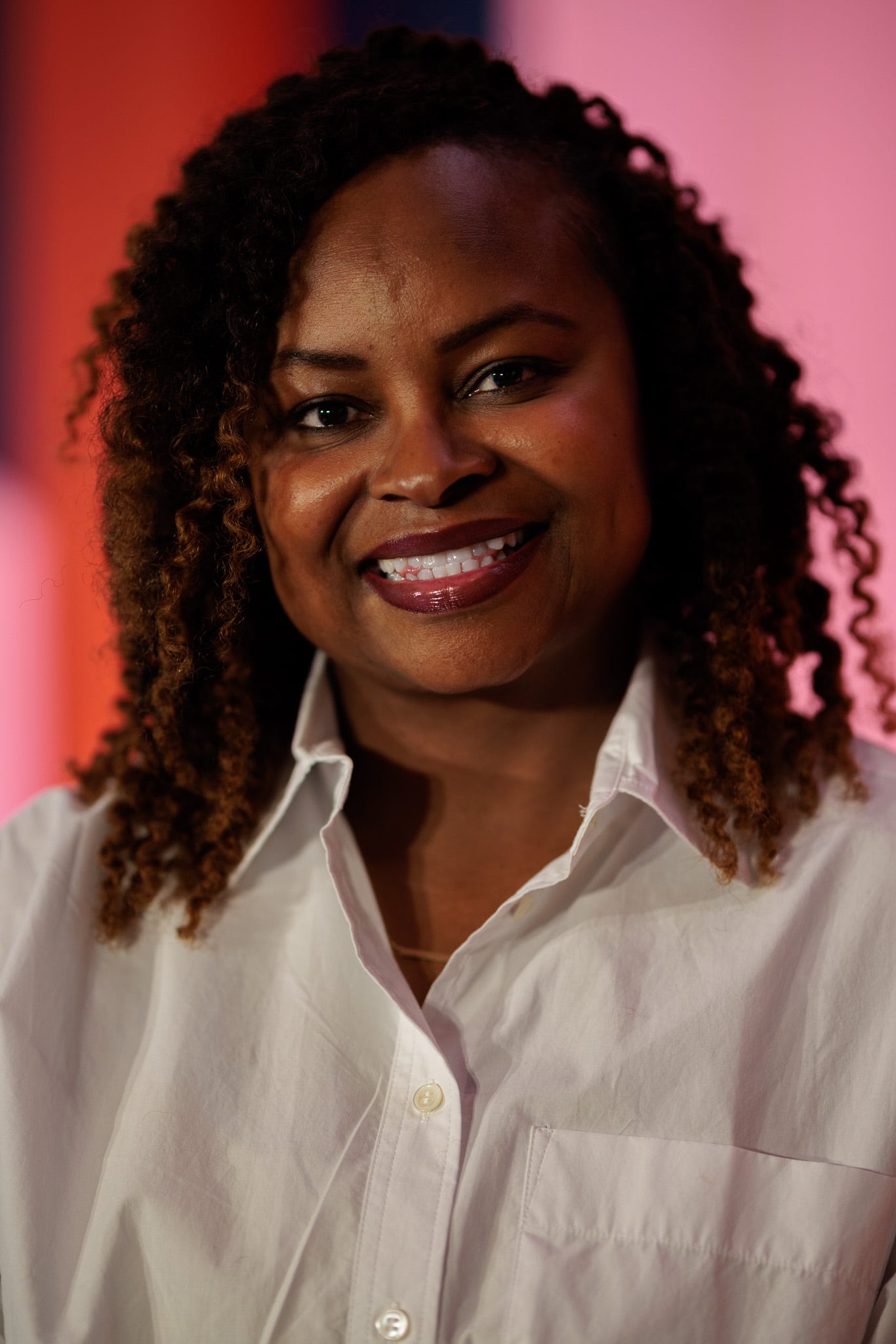
Finding Advocacy
It wasn’t until later when I spoke to Amber Thurman’s mom, Shanette, a few months later, and she kind of was inspiring to me. She said, “You need to tell her story.” So, I’ll forever be grateful for her giving me the courage to come out and tell my sister’s story.
Becoming an advocate has allowed Turiya to build community amongst others who have lost family members to abortion bans and those who have sought out abortion care themselves. Now, Turiya has been able to explore her own abortion story as well.
I had an ectopic pregnancy and I lived in Florida at the time. This was before Roe v. Wade was overturned.
But I just think about that pregnancy and how excited my husband and I were to have a child. This would have been our first child, and I got sick at work and had excruciating pain. I had to go to my OBGYN and when I got there they were like “you need to go to the hospital immediately, you are having an ectopic pregnancy and the pain you have means a possibility of rupturing your fallopian tube.”
I’m devastated processing all of this and thank God I was able to get the methotrexate shot to dissolve the fetus, because I was only seven weeks pregnant at the time. But if I had not been able to do that, I could have lost my fallopian tube and not been able to have my son.
Care in Florida has changed drastically since Roe v. Wade was overturned. The state now enforces a six week abortion ban. And while ectopic pregnancies are legally defined separately from abortion care, Turiya is hesitant to accept this as confirmation that women in the state are truly able to receive the care they need.
A woman who is in distress and going through an ectopic pregnancy, that’s an excruciating painful process. And these laws don’t protect women in that case.
I asked Turiya if her own experience of needing to access abortion care came to mind when she found out that her sister Candi had died after not being able to access safe and comprehensive abortion care.
Not at all. It did not. And the reason why it didn’t is because I wasn’t thinking my story was an abortion. It didn’t come to mind until I went to the storyteller summit when I realized that there were so many other women who were there not just for what we deem as an “abortion.”
There’s a negative connotation that comes to the word abortion, and abortion is not a negative thing. It’s a life-saving procedure that is necessary for a lot of women. And that’s when it came to mind that I have my own story. So I did not think about my own personal experience because I didn’t think of what I was having as an abortion. I was looking at it as necessary to save my life and to save the life of my future children.
To close, Turiya shared some of the sources of inspiration in her life.
I have so many wonderful women in my life that have inspired me, but honestly, if I had to pick, I can’t just pick one. So, I would have to say two people that really inspire me.
It would be my grandmother, because if it wasn’t for her, I wouldn’t be the woman that I am today.
And recently, my sister, She inspires me because I have to keep going and not because of her in the physical sense, but because of her children. I’m inspired to keep going for her children.
Dear Turiya, thank you for sharing so much about your experience and Candi's and about who Candi was. I want you to know that I included Candi's story, with a reference to you and Shanette as the warriors you are, in my art project, Living and Dying Under Dobbs. I am using the project to amplify stories like yours because I want to ensure they are never forgotten. underdobbs.org